
Operators first
We write for the person who owns uptime, crawl budget, and release risk — not for buzzword decks. Clear severity, owners, and next steps beat vanity dashboards.
Loading…
About WebKernelAI
Built as a premium technical intelligence workspace for teams improving search visibility, trust, and site quality at scale.
WebKernelAI is built to help teams audit websites more clearly, fix technical issues faster, and improve the signals that affect search visibility and user trust.
Who we are
WebKernelAI is an AI-powered technical SEO, website security, and search intelligence platform built to bridge the gap between backend engineering and organic search visibility. We believe that true search visibility is not just about keyword density — it is about continuous crawl monitoring, indexing issues, performance stability, security headers, and structured data analysis. When those signals drift, search visibility and user trust erode long before your content team notices.
Our platform runs deep crawl diagnostics, performance analysis, and website security scanner processes to prioritize the optimizations that actually matter. Whether you are optimizing for traditional search engines like Google Search, or preparing your site for visibility across modern AI search engines and AI assistants, WebKernelAI delivers the code-level recommendations you need to keep site health high.
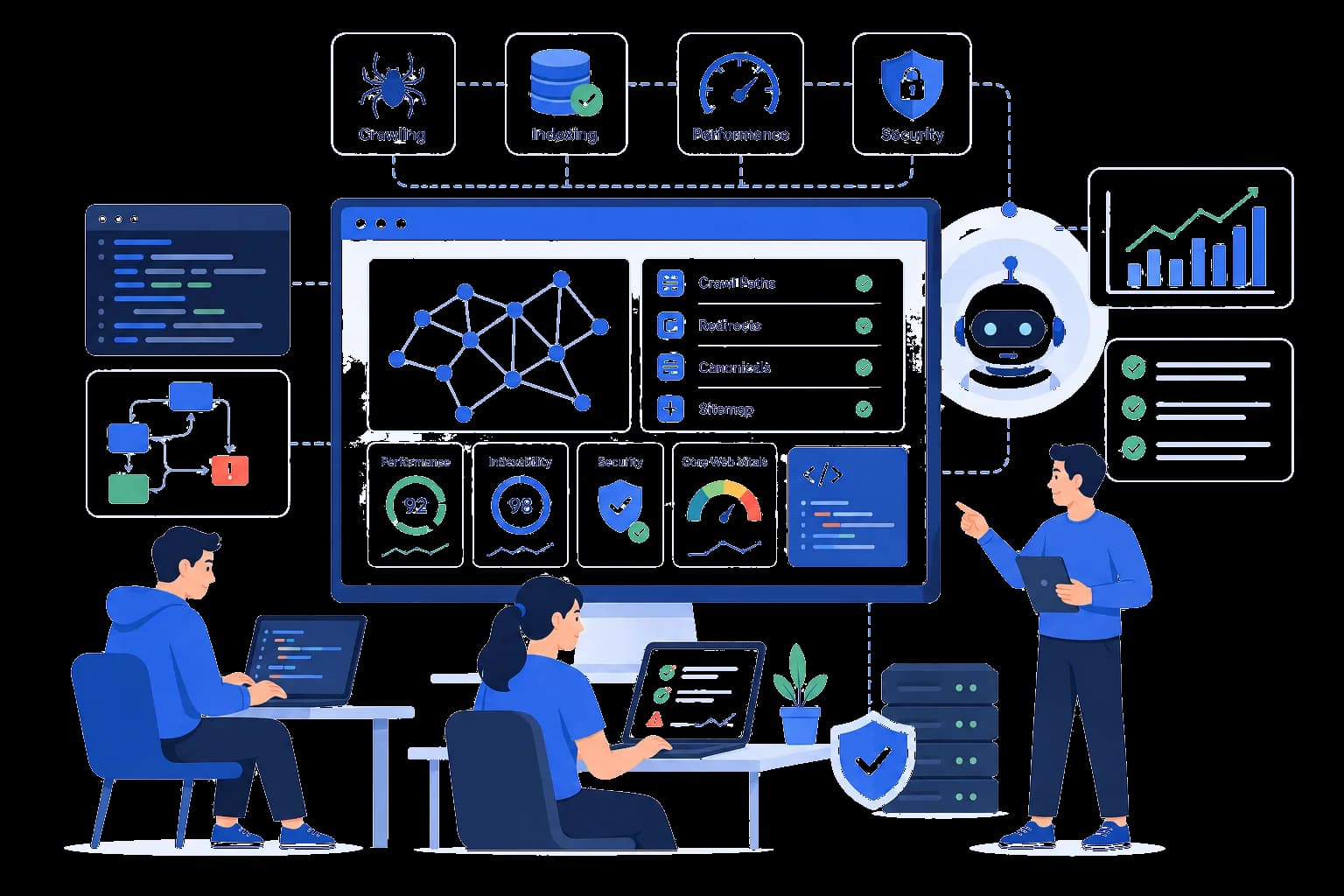
AI Search Era
Modern search visibility is changing. While traditional optimization helps search engines index your pages, AI search optimization ensures answer engines — like ChatGPT, Claude, and Perplexity — correctly parse, summarize, and credit your content. WebKernelAI provides the website intelligence needed to optimize for both.
Ensure AI crawlers and traditional search bots (like GPTBot, ClaudeBot, and Googlebot) can discover and read your URLs cleanly. We audit sitemaps, robots.txt, and link paths to prevent crawl blocks.
Validate schema markup, metadata, and entity relationships. Establish deep topical relevance for AI semantic processing so LLMs correctly understand and index your brand details.
Verify domain trust with security headers, JavaScript vulnerability scanning, and clear schema formatting. Ensure content is formatted so it is selected in AI answers and Google AI Overviews.
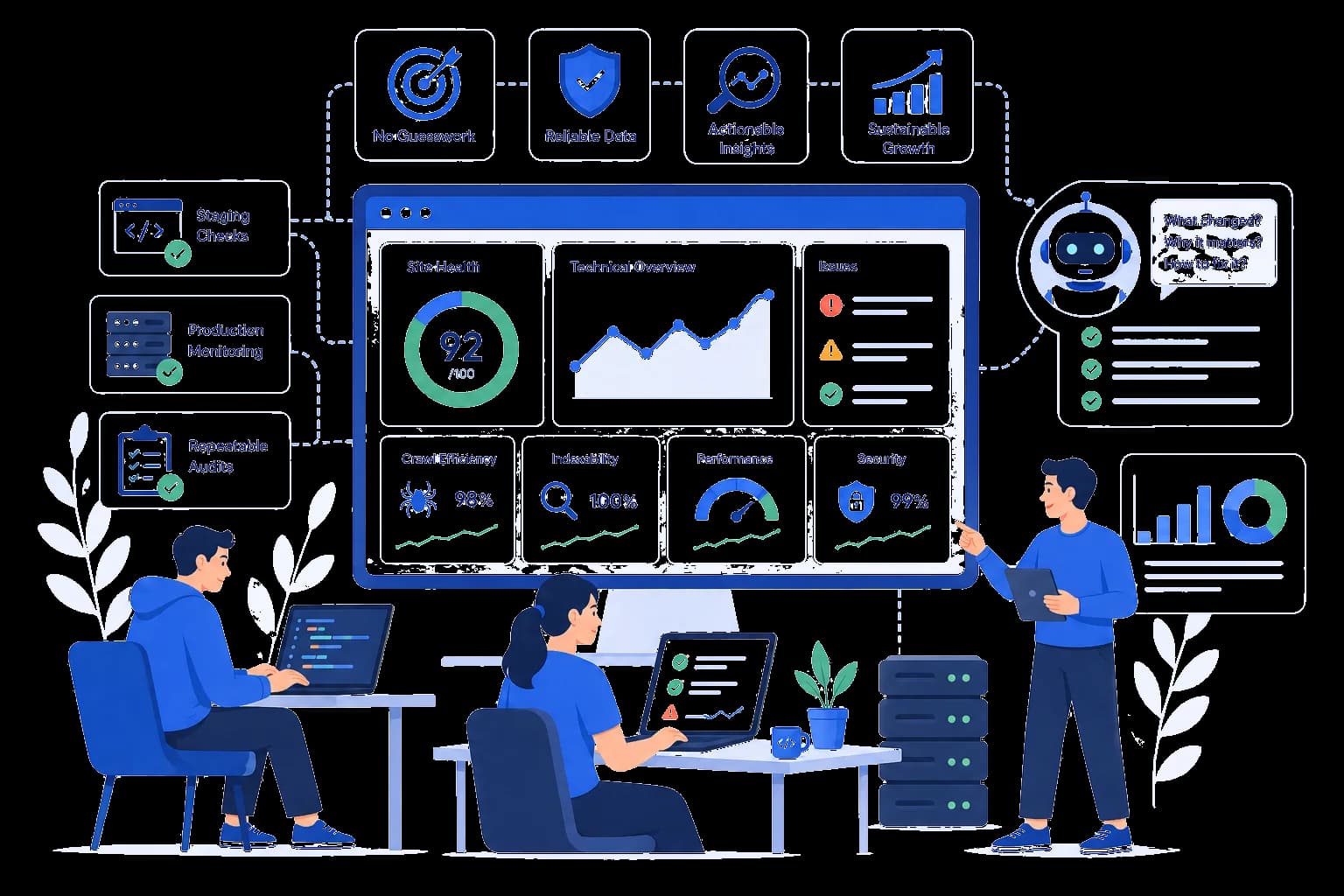
Target Audience
WebKernelAI is built for practitioners who need absolute certainty about their website's technical health, crawl monitoring, and search engine readiness.
Code-level recommendations and security header checks that integrate with production pipelines.
Deep crawl monitoring, structured data analysis, and schema audits without disconnected tools.
Multi-domain diagnostics, white-labelable insights, and repeatable audits for client accounts.
Protect organic search visibility and optimize brand entities for both Google and AI search engines.
WebKernelAI was born out of backend engineering necessity. Having spent years managing large-scale web infrastructures, our founding team repeatedly ran into the same painful scenarios: crawl problems that sank search rankings, broken deployments that went unnoticed, slow page loads, and critical website security breaches.
We built WebKernelAI to be the platform we always wished we had — a unified website intelligence tool that operates like a production compiler, finding SEO, security, and performance risks before they affect your traffic.
Diagnosing how search engine bots crawl and index complex architectures, resolving robots.txt blocks and sitemap loops.
Eliminating pre-launch anxiety by catching redirect loops, missing metadata, and broken links before they go live.
Profiling slow rendering, render-blocking scripts, and Core Web Vitals to deliver code-level optimization fixes.
Detecting script injections, misconfigured security headers, and JS packages with vulnerability scanning.
How we work
These principles shape every scan, every limit, and every recommendation we ship — whether you are on a free public tool or a full monitoring workflow.
We write for the person who owns uptime, crawl budget, and release risk — not for buzzword decks. Clear severity, owners, and next steps beat vanity dashboards.
Headers, TLS, malware signals, and deceptive patterns belong in the same narrative as hreflang and canonicals. Trust is a technical property, not a marketing sticker.
Guides and in-product context explain why a check exists and how to fix it safely. We grow better practitioners, not dependency on black-box scores.