
An operational rhythm for website quality (not just launches)
PublishedApril 4, 2026
6 min read
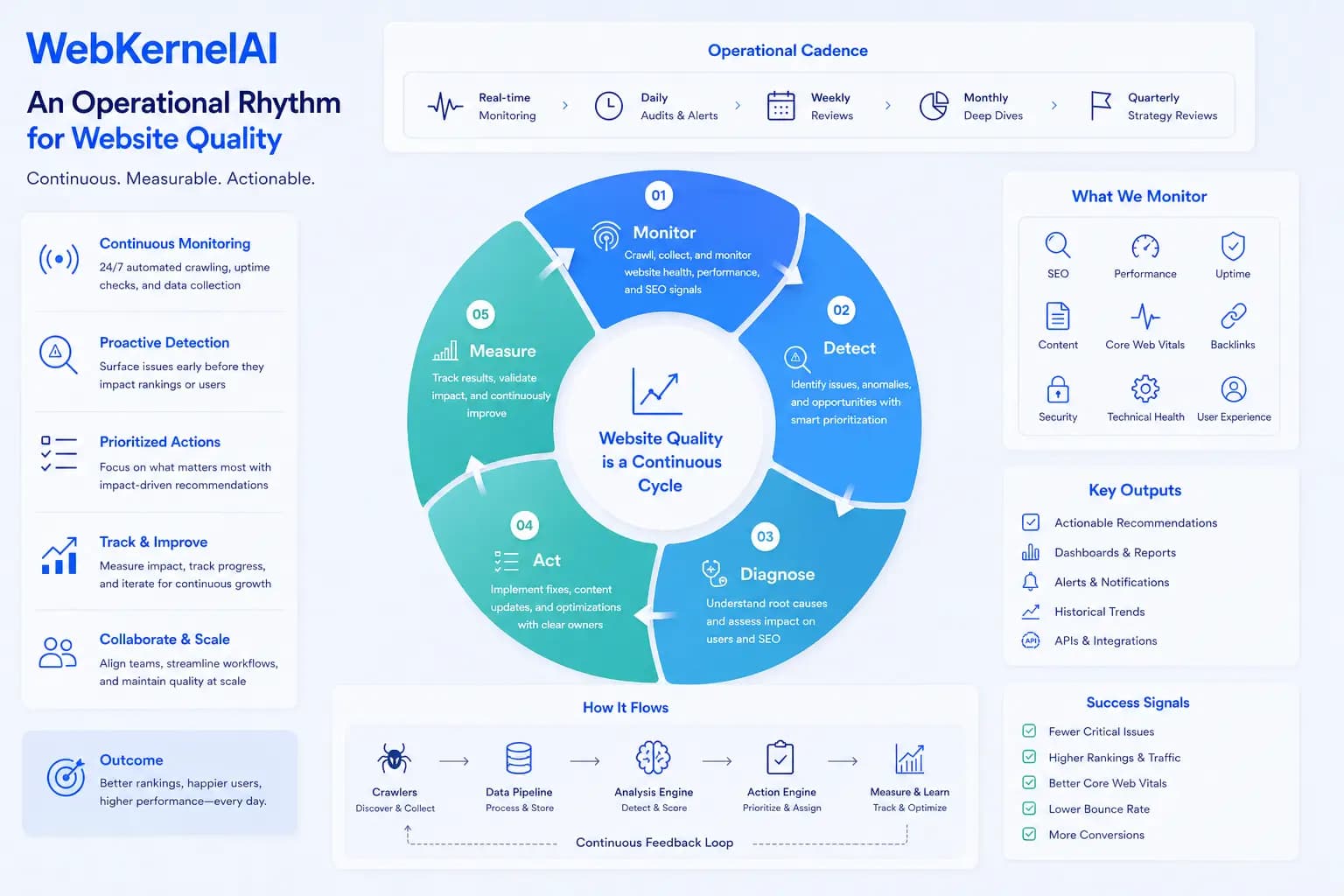
Most incidents are not novel attacks—they are slow drift: SSL renewals missed, headers regressed after a CDN change, or a staging robots rule copied to production. Resilience is a cadence, not a project.
Weekly: fast signals
Run automated checks on representative URLs: uptime, TLS validity, top templates, and critical paths. Keep the list short so it actually finishes every week.
Monthly: deeper scans
Rotate through malware scans, broken link sweeps, and performance budgets. Track deltas, not absolutes—what changed since last month and who owns the fix?
Quarterly: strategy alignment
Review roadmap vs. backlog. If security or SEO debt is repeatedly deferred, widen the scope or reduce commitments—burnout and outages cost more than scope cuts.
WebKernelAI centralizes domain-bound tools so your team spends less time wiring scripts and more time shipping fixes your users can feel.